Virtual Reality Gaming: Is It the Future or a Passing Trend?
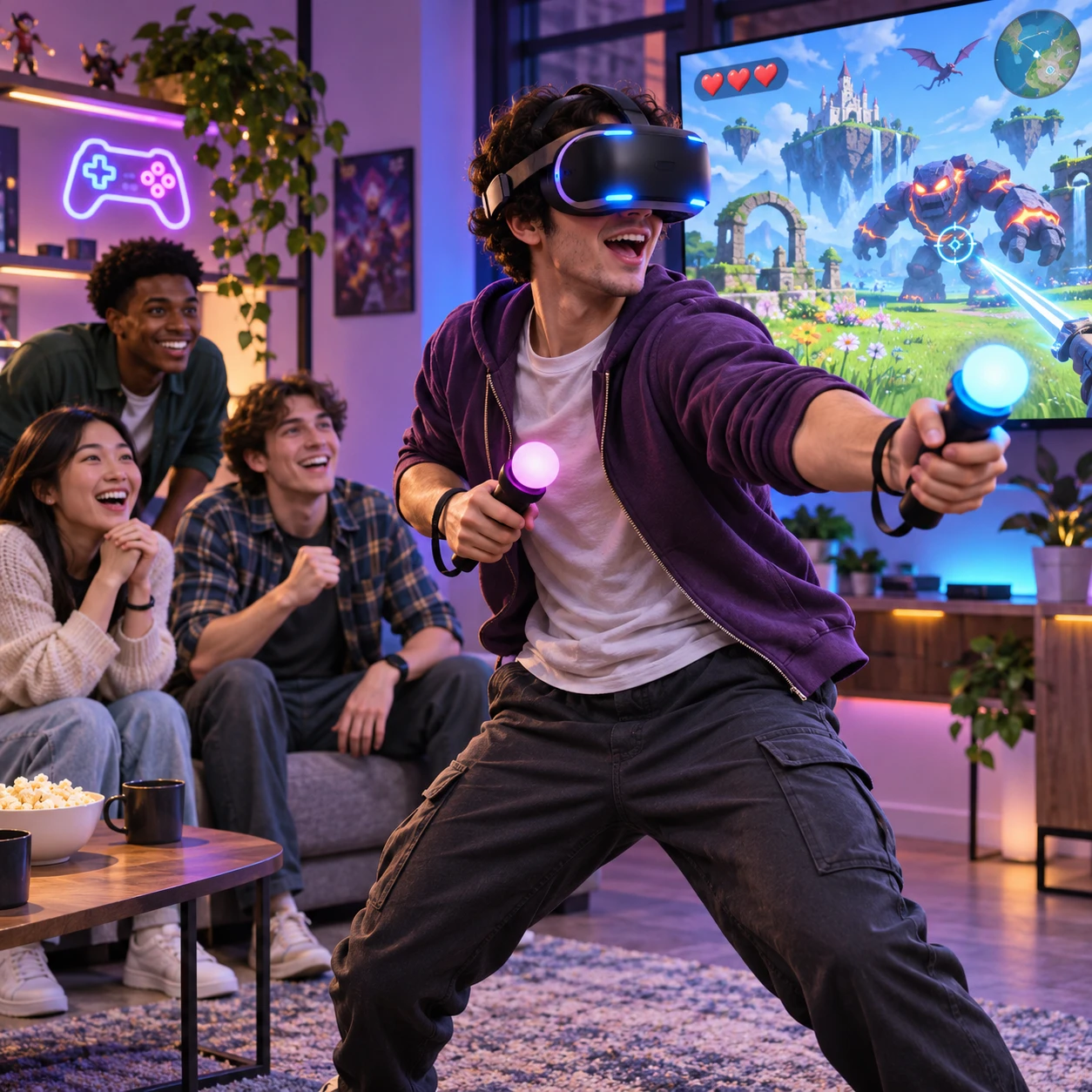
Virtual reality gaming makes the player part of the game world, rather than placing them in front of it. That shift can make an ordinary play session feel startlingly immediate, but VR headsets still bring practical questions about price, comfort, game choice, and space.
So is VR gaming the future or a passing trend? The clearest answer is that it has earned a lasting place in gaming, though it is unlikely to replace traditional games for everyone. Its long-term reach will depend on making immersive gameplay easier to access and more comfortable, while giving players enough great games to keep coming back.
What Makes VR Gaming Different?
VR gaming uses a headset to show a three-dimensional environment that responds to the player’s head movements. Motion controllers can add hand movement and physical interaction, making the experience feel more direct than playing with a screen and a standard controller.
In a traditional game, you might press a button to look around a room. In VR, you turn your head and see the room from a new angle. You can reach for an object, aim with your hands, or duck behind cover. The game’s controls become part of the scene.
That interaction changes how designers create games. A puzzle might ask you to rotate a mechanism with both hands; a rhythm game may have you swing controllers to the beat. VR can also make familiar genres feel fresh, although the same physical demands may be tiring during a long session.
Immersion is VR’s defining strength, but it depends on more than convincing graphics. Responsive tracking, clear visuals, comfortable controls, and a game that uses movement well all matter. A headset cannot make a weak game compelling simply by making it three-dimensional.
Why Players Are Drawn to VR
Players are drawn to VR because it offers experiences that feel physical, immediate, and difficult to reproduce on a regular screen. Strong VR games make looking, reaching, moving, and reacting part of the fun.
The appeal varies by player. Some enjoy the scale of exploring a virtual world; others prefer the focus of a cockpit, the quick reactions of a rhythm game, or the unusual problem-solving of a room-scale puzzle. Even a short session can feel memorable because the player’s body helps carry out the action.
Social play adds another dimension. Multiplayer gaming in VR can make conversation more expressive through avatars, gestures, and shared spaces. Friends can meet in a virtual room, play a cooperative game, or simply talk. Yet it is still different from a familiar party game on a TV: everyone may need a headset, and the experience depends on a reliable connection and compatible software.
For newcomers, the strongest reason to try VR is often a specific game or activity, not the technology by itself. A favorite genre with a thoughtful VR design is a better introduction than buying a headset and hoping its novelty will last.
The Challenges Holding VR Gaming Back
VR gaming remains harder to adopt than traditional gaming because headsets cost money, require a comfortable fit, and offer a smaller game library than established platforms. Those barriers affect both first-time buyers and people deciding how often they will use a headset.
Hardware cost includes more than the headset in some setups. Depending on the device, a player may also need a capable computer, accessories, or a clear area to move safely. Standalone headsets avoid the need for a gaming PC, but they still represent a purchase whose value depends on the games and features a person will actually use.
Comfort and motion sickness are personal and can limit play. A tight fit, heat, eye strain, or a mismatch between what the player sees and feels may make a session unpleasant. Some games involve fast movement that can be difficult for new users. Comfort features such as teleport movement or stationary play can help, but they do not work equally well for everyone.
Accessibility is broader than price. Players may have limited space, mobility, vision, or tolerance for wearing a headset. Menus and controls can also create obstacles if they are not designed with different needs in mind. VR developers have improved options in some games, but accessibility varies from title to title.
Finally, the VR game library is narrower than the catalog available on major consoles and PCs. A smaller selection does not mean there are no worthwhile games; it does mean buyers should check the titles they want before choosing hardware. The trade-off is clear: VR can provide a distinctive experience, but its value depends heavily on personal comfort and sustained interest.
What Could Shape VR’s Future?
VR’s future will depend on whether hardware becomes more comfortable and convenient, games offer reasons to return, and setup feels simple for a wider range of players. These are possibilities, not guarantees, and progress in one area cannot solve every barrier.
Lighter headsets, better battery life, clearer displays, and more reliable tracking could make daily use less awkward. Easier setup matters just as much: a device that starts quickly and explains its controls clearly is more inviting than one that requires troubleshooting before every session. Lower prices or more flexible hardware options could also help, though affordability alone will not create lasting demand.
Game design may prove just as important. Developers can build experiences around what VR does well, rather than simply adapting a traditional game to a headset. That could mean more thoughtful hand interactions, comfortable movement options, and multiplayer features that work well for both headset owners and their friends on other platforms.
The key test is repeat use. A headset can attract attention with a striking first session, but lasting value comes from a steady stream of games and activities people choose to play again. If comfort, accessibility, and the game library improve together, VR could reach more players. If those pieces remain uneven, it may stay a compelling option for a smaller audience.
Future of Gaming or a Niche Experience?
VR is likely to remain part of gaming, but the evidence does not point to it replacing traditional games across the board. It currently works best as a distinct way to play, with strengths that matter greatly to some players and less to others.
Traditional gaming is convenient: a console or PC can serve several people, games are easy to start, and players can enjoy long sessions without wearing equipment. VR offers a different kind of presence and interaction, but asks more of the player in return. Neither format has to defeat the other.
That makes “future or passing trend?” a slightly misleading choice. VR can be a durable part of gaming without becoming the default way everyone plays. Its strongest future may be as one option among many, especially for games where physical interaction and a sense of presence add real value.
For the industry, the challenge is turning memorable demos into a dependable platform. For players, the practical question is simpler: does the experience you want justify the cost, space, and comfort trade-offs? Answering that is more useful than trying to predict the whole market.
Is VR Gaming Worth Trying Now?
VR gaming is worth trying now if you are curious about immersive gameplay and can test a headset before committing to a purchase. A short demo helps you judge comfort, movement, and visual clarity for yourself.
Before buying, use this quick check:
- Choose the games first. Make a short list of titles you genuinely want to play, then confirm they run on the headset you are considering.
- Check the full setup. Find out whether you need a gaming PC, extra accessories, a compatible account, or more floor space.
- Try the fit and movement. Wear the headset for a short session and test a stationary game before choosing one with fast motion.
- Consider who will use it. Think about multiplayer access, shared use, accessibility needs, and whether other household members are interested.
- Set realistic expectations. Treat VR as another gaming format, not a replacement for every game you already enjoy.
A common mistake is buying a headset for novelty alone. The initial excitement may fade if the library does not match your tastes. Another is pushing through discomfort because a game seems designed for movement; stopping, taking a break, and trying a gentler movement option is a better response.
If the available games appeal to you and a trial feels comfortable, VR can be rewarding today. If not, waiting is sensible. Headsets and libraries will continue to change, and there is no need to buy into the technology before it fits your habits.
Frequently Asked Questions
Do you need a powerful computer for VR gaming?
No. Some VR headsets run games on the headset itself, while PC VR requires a computer that meets the headset and game’s requirements. Check those specifications before buying; a standalone model may be simpler, while PC VR can offer access to a different range of games.
Can VR gaming cause motion sickness?
Yes, some players feel discomfort or motion sickness, especially in games with smooth movement or rapid turns. Start with short sessions, use comfort settings such as teleport movement when available, and stop if you feel unwell. Responses differ from person to person.
Is VR gaming suitable for casual players?
It can be. Many VR games are built for short, approachable sessions, including rhythm, puzzle, and social games. Casual players should still consider the headset’s cost, comfort, and game library before purchasing.
What should you consider before buying a VR headset?
Check game compatibility, total cost, headset comfort, space requirements, accessibility options, and whether you need a gaming PC. If possible, try a headset first. Your comfort and interest in its games matter more than a long feature list.