The Psychology of Gaming: Why We Play and What Keeps Us Hooked
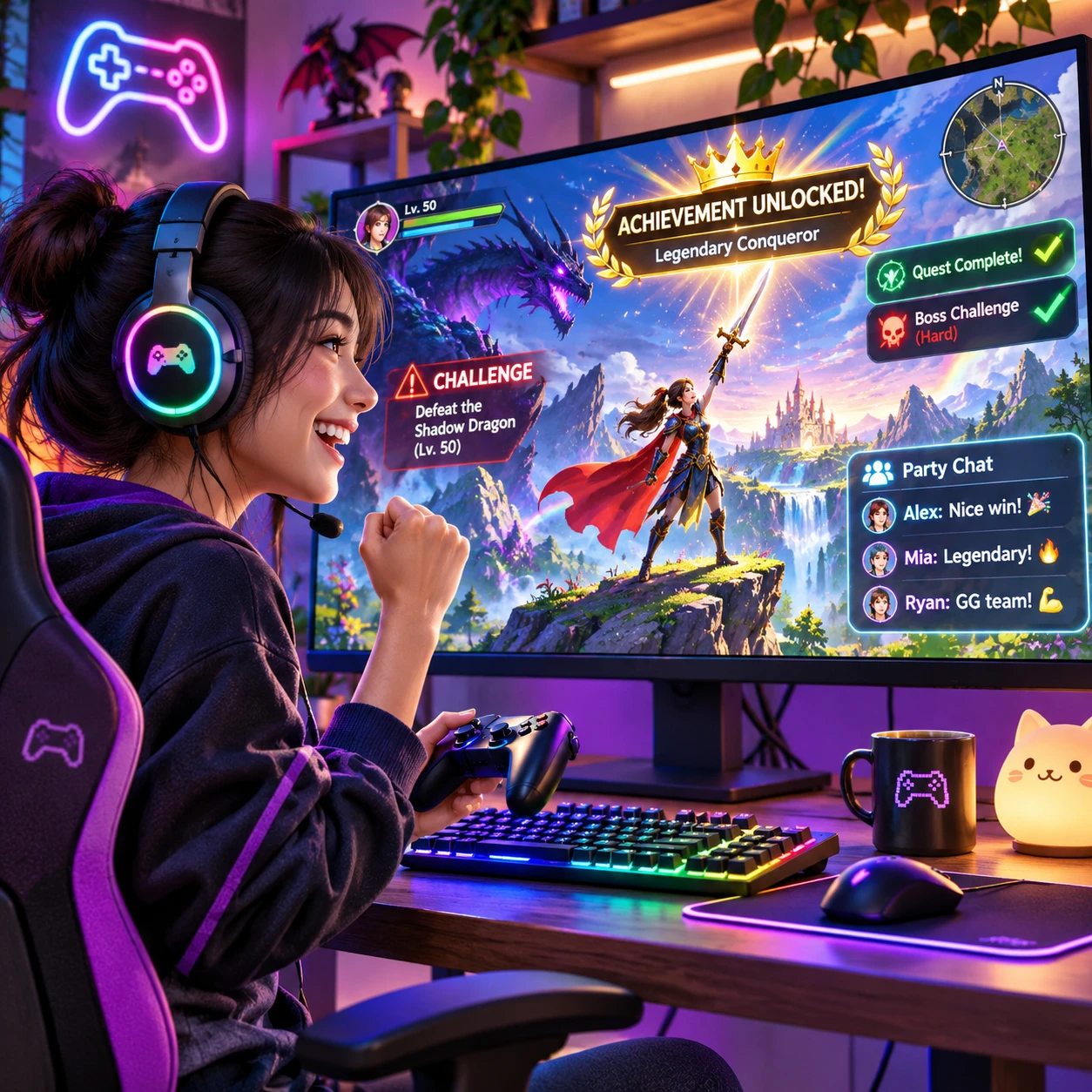
A game can turn a quiet evening into a tense boss fight, a creative building session, or a long chat with friends. Those experiences meet different psychological needs, which helps explain why people play and why some games are hard to put down. Understanding those patterns can make gaming more rewarding and help you notice when it starts crowding out other parts of life.
Why games appeal to us
Games appeal because they offer enjoyment, curiosity, challenge, relaxation, and a clear sense of achievement. Which motive matters most depends on the player, the game, and even the day.
Some players are drawn by intrinsic motivation: the activity itself feels satisfying. Exploring a new map, solving a puzzle, or learning a complicated combo can be enjoyable even without a prize. Others respond more to extrinsic motivation, such as unlocking a character, earning ranked points, or completing a daily objective. Many games combine both.
Games also make experimentation feel relatively safe. You can try a risky strategy, fail, and restart without the consequences you might face in a real-world task. That freedom supports curiosity and learning. A calming farming game may offer a predictable routine after a demanding day, while a competitive match can provide intensity and focus. Neither type of play has one universal effect; what feels relaxing to one person may feel stressful to another.
Achievement matters, too. Games break large ambitions into visible milestones: finish a level, improve a build, or reach the next rank. That structure can make effort feel purposeful, especially when the player can see how each attempt contributes to progress.
The needs games can satisfy
Games can support autonomy, competence, and relatedness: the feelings of having meaningful choices, building skill, and connecting with others. These needs help explain why engagement often lasts beyond a single reward.
Autonomy comes from having choices that matter. An open-world game might let you follow the main story, explore a side quest, or spend an hour customizing a home base. That freedom can make play feel personal. Too many choices, though, can become tiring, particularly when every decision seems to carry a penalty.
Competence grows when players can see themselves improving. The first attempt at a difficult platforming section may end in repeated falls; later, a familiar jump becomes automatic. Good challenges offer room to learn and provide enough feedback to show what changed. If a game hides the reason for failure, difficulty can feel arbitrary rather than rewarding.
Relatedness is the sense of being connected to other people. It can come from coordinating with a team, helping a guildmate, or sharing a funny moment in a co-op game. Single-player games can also create connection through fan communities and shared discussion. These needs are useful lenses, not a checklist every player must satisfy. Someone may play mainly for a clever story or the pleasure of collecting.
Challenge, progress, and the flow state
Balanced challenge, clear goals, and useful feedback can help players enter a flow state, a period of deep concentration in which the activity feels absorbing. Flow is more likely when a task is demanding but still seems manageable.
If a game is too easy, attention may drift. If it is far beyond your current skill, frustration can take over. The sweet spot shifts as you learn, which is why a well-paced game introduces new mechanics gradually or lets players adjust difficulty. A puzzle can start with one rule, then combine it with others; a strategy game can ask you to manage more resources as you become comfortable with the basics.
Goals and progression help focus that effort. A useful goal is specific enough to guide the next action, such as reaching a checkpoint or testing a new team setup. Progress indicators, maps, and quest logs can reduce uncertainty about what to do next. They can also make a game feel like a list of chores when every optional task is framed as something you should complete.
Flow is not a guaranteed benefit or a sign that play is always healthy. Losing track of time can be enjoyable during a free evening, but it may be inconvenient when you have work or sleep to protect. Treat immersion as an experience to manage, not a measure of how good or bad a player you are.
Rewards and feedback that keep play moving
Rewards and feedback keep play moving by showing players what their actions accomplished and offering reasons to continue. A useful reward can mark progress; a poorly timed or overwhelming stream of rewards may make play feel less satisfying.
Games use many forms of reinforcement: experience points, new abilities, story revelations, cosmetic items, achievements, and positive feedback from teammates. Some rewards arrive immediately, such as a clear sound and animation when a puzzle is solved. Others build over time, like gradually improving a character or completing a long campaign.
These systems can form feedback loops. You take an action, see its result, and decide what to try next. When a new ability opens up a fresh strategy, the loop supports learning. When progress depends on repeating the same task for a small chance at a rare item, it can feel more like a grind. Random rewards may be exciting for some players, but uncertainty can also encourage repeated attempts, so it helps to notice whether the activity remains enjoyable or has become an obligation.
Habit formation can also shape when people play. A familiar cue, such as finishing dinner, may prompt a quick round; the round itself provides entertainment or social contact, reinforcing the routine. That pattern is not automatically a problem. The key question is whether the habit fits your priorities and whether you can pause or choose another activity when you intend to.
Playing together: the social side of gaming
Gaming can build social connection through cooperation, competition, community, and shared experiences. Playing together gives people a common goal or a story to talk about afterward.
In cooperative games, players might divide roles, revive a teammate, or coordinate a difficult encounter. These small acts of trust can make success feel shared. Competitive games offer a different appeal: testing skill, reading an opponent, and improving over repeated matches. Competition can be energizing, but rankings and public chat can also create pressure, so the experience depends on the group and the game’s environment.
Social play extends beyond the match. Friends may use a game as a regular place to meet, while online communities exchange guides, celebrate achievements, and debate strategies. Shared experiences can matter as much as the game’s mechanics. For some players, logging in is mainly about seeing the people they play with.
That connection has limits. Online interactions can include harassment, conflict, or pressure to stay available. Muting disruptive players, setting group expectations, and choosing sessions that fit your schedule can help preserve the enjoyable parts.
When engagement becomes difficult to manage
Immersive gaming becomes a concern when it repeatedly disrupts responsibilities, relationships, sleep, or wellbeing, or when you struggle to stop despite wanting to. Time spent playing alone does not tell the whole story.
A long weekend session may fit comfortably into someone’s life; a shorter session could still cause problems if it regularly replaces sleep or essential tasks. Look for patterns rather than judging yourself by a single night. Ask whether you are missing commitments, feeling persistent conflict with people close to you, or continuing in ways that leave you distressed.
Practical boundaries work best when they are specific and easy to act on:
- Set a stopping point, such as one match after a set time, and use an alarm if matches tend to run long.
- Protect fixed commitments by deciding in advance when gaming needs to end for work, school, meals, or sleep.
- Review your routine for a week. Note when you play, what you hoped to get from it, and how you felt afterward.
- Change the setup if needed: turn off nonessential notifications, remove a game shortcut, or schedule sessions with friends rather than logging in automatically.
These steps are not a diagnosis or a substitute for professional support. If gaming repeatedly feels outside your control or causes serious problems, consider speaking with a qualified health professional. The aim is to understand what is happening and find support without labeling all gaming as harmful.
Making sense of your own gaming habits
You can understand your gaming habits by asking what you seek from play, what keeps you engaged, and whether the experience still fits your life. Honest answers are more useful than a simple count of hours.
Try reflecting on a recent session. Were you looking for relaxation, challenge, mastery, social connection, or a way to avoid a difficult feeling? Did you leave feeling satisfied, energized, frustrated, or as though you had played longer than intended? Which parts of the game felt meaningful, and which felt like tasks you completed out of pressure?
Then look for one small adjustment. If you play to connect with friends, plan a session that ends at a natural stopping point. If you want mastery, choose a focused goal, such as practicing one technique, instead of chasing every reward. If you need downtime, pick a game and session length that actually help you unwind.
Gaming can offer pleasure, challenge, competence, and companionship. The most useful question is not whether a game is designed to hold your attention; engaging games are. It is whether the way you play supports the experiences and priorities you want.
Frequently asked questions
Why do people enjoy playing video games? People enjoy games for different reasons, including curiosity, relaxation, achievement, skill-building, storytelling, and time with friends. No single motivation explains every player.
What is flow in gaming? Flow is deep concentration that can occur when a game’s challenge matches a player’s skill and provides clear goals and feedback. It can make play feel absorbing, but it does not mean a session is always beneficial or easy to stop.
Are rewards in games designed to keep players playing? Rewards often encourage continued play by marking progress and suggesting new goals. Their effects vary, and a reward system can be satisfying, repetitive, or pressuring depending on its design and how a player responds.
How can I tell if gaming is affecting my wellbeing? Consider whether play repeatedly interferes with sleep, responsibilities, relationships, or activities you value, and whether you can stop when you intend to. If the pattern causes significant distress, seek guidance from a qualified professional.