A Beginner's Guide to Speedrunning: Tips and Community Insights
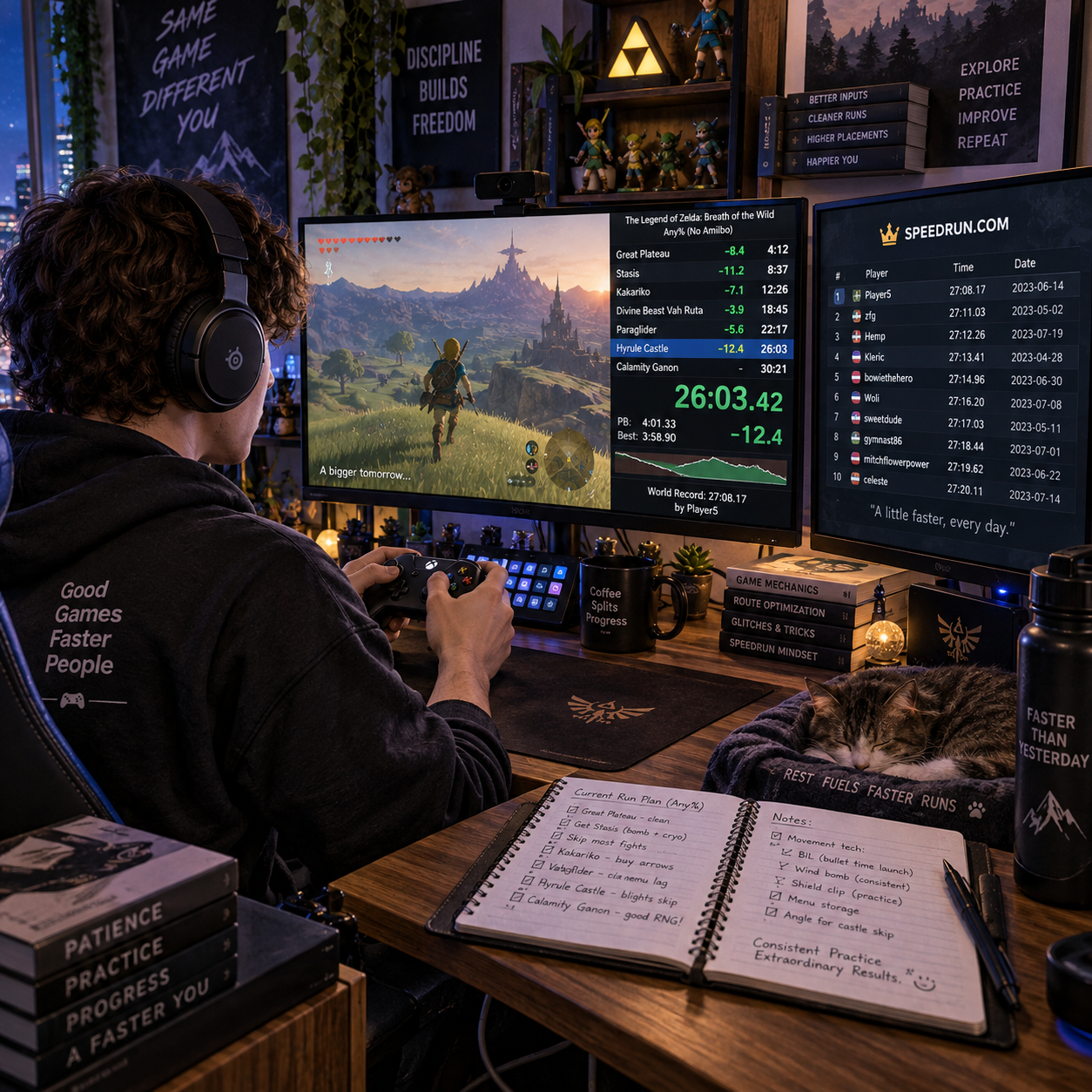
Speedrunning turns familiar games into timed challenges built around planning, precision, and persistence. You do not need elite reflexes, expensive equipment, or a world-record ambition to begin. A good first run might simply be your first completed attempt, followed by a personal best you can improve over time.
What Is Speedrunning?
Speedrunning is the practice of completing a video game, level, or objective as quickly as possible under clearly stated category rules. Runners use efficient movement, route planning, precise execution, and sometimes glitches or exploits to reduce their time.
Every valid run has a defined start and finish. The rules may specify the game version, platform, timing method, allowed glitches, required objectives, and whether outside tools are permitted. These details make times comparable instead of turning each attempt into a different challenge.
Speedrunning includes casual practice, community competition, and record chasing. The world record is the fastest verified time on a recognized leaderboard, while a personal best (PB) is your own fastest completed run. For most beginners, the PB is the more useful target because it measures improvement directly.
Choosing Your First Game and Category
To choose your first speedrun, select a game you enjoy, understand reasonably well, and can practice without the run becoming overwhelming. A supportive community and a manageable run length often matter more than a game’s popularity.
Start with four questions:
- Do you enjoy replaying it? Speedrunning involves repetition, so genuine interest helps you continue through failed attempts.
- How long is a typical run? A ten-minute category gives frequent feedback, while a two-hour run demands more endurance and reset discipline.
- How difficult is the basic route? Choose a challenge that teaches useful skills without requiring advanced, frame-perfect techniques immediately.
- Does the game have community support? Guides, leaderboards, practice resources, and active discussion can shorten the learning curve.
The two categories beginners encounter most often are Any% and 100%. Any% asks you to finish the game as quickly as possible, usually with only the minimum completion requirement. 100% requires all objectives defined by that category, such as collectibles, upgrades, missions, or endings. Any% is often shorter, but it may rely on complicated glitches. A 100% run can be easier to understand while taking much longer.
Browse the relevant game page on Speedrun.com before committing. Check category rules, recent submissions, beginner guides, and the times near the middle of the leaderboard. Those details reveal whether the category matches your available time and current skill.
Understanding Speedrunning Rules and Terminology
Speedrunning rules define what counts as a valid attempt, while terminology describes how runners measure, practice, and compare their progress. Read the category rules before practicing seriously because a fast time can still be invalid if it breaks a restriction.
Core terms every beginner should know
- Leaderboard: A ranked list of verified runs for a game and category.
- Personal best (PB): Your fastest completed and recorded time.
- World record: The fastest accepted time currently listed for a category.
- Splits: Checkpoints that divide a run into sections and show where time was gained or lost.
- Reset: Ending an attempt early, often because of a mistake or slow opening section.
- Glitch: An unintended game behavior that helps the runner skip content or move faster.
- Exploit: A broader advantage created by using game systems in an unintended way. Some exploits are allowed; others are banned.
Timing rules can vary. Some communities use real time from a run’s start to its finish, while others use in-game time when the game supports it. Category restrictions may also cover glitches, save manipulation, difficulty settings, language, regional versions, or required evidence such as a video recording.
When in doubt, ask a specific question in the game’s community rather than assuming. Transparent rules protect fair competition and prevent wasted practice on a run that cannot be submitted.
Building and Practicing a Speedrun Route
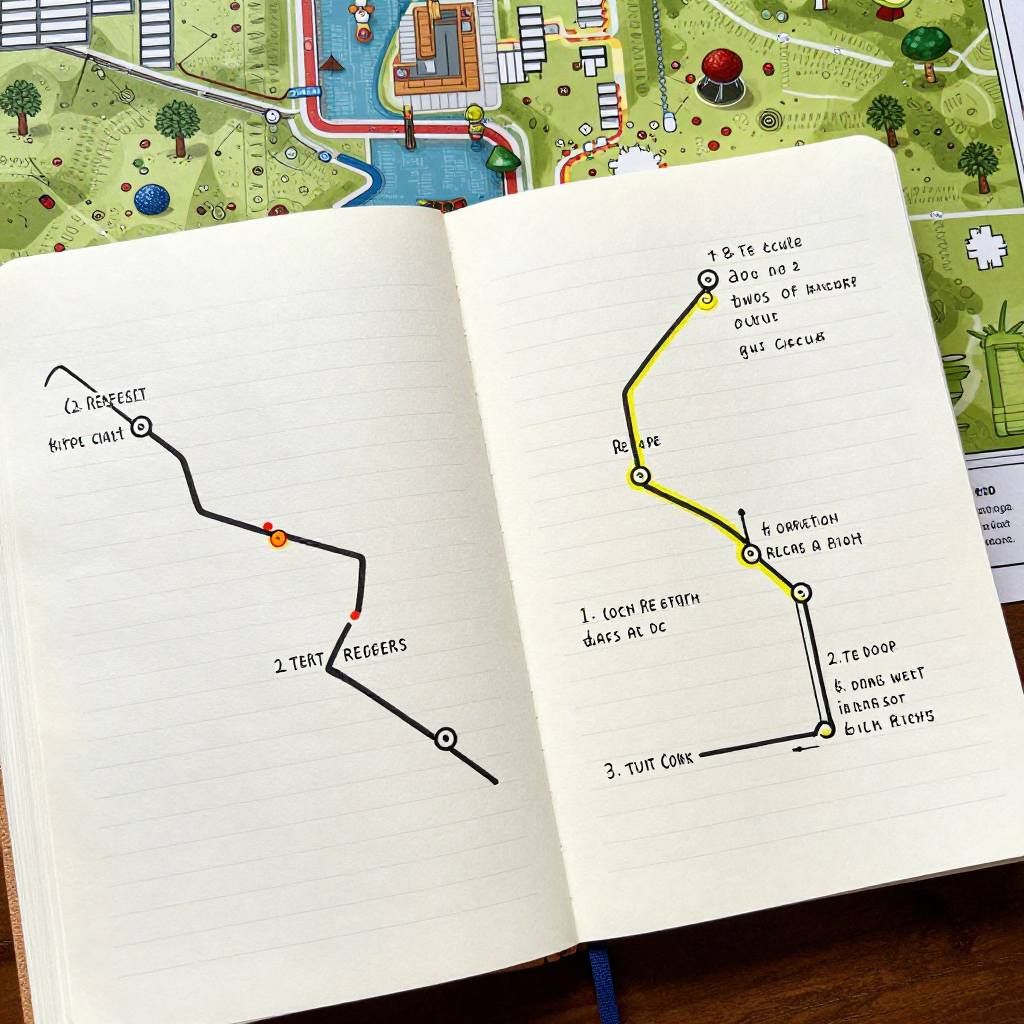
To build a speedrun route, study an existing strategy, divide it into sections, learn the required movement, and then combine those sections through full attempts. This gradual process is more productive than repeatedly restarting without understanding why the run fails.
Use a route-learning cycle
- Research: Watch a strong but understandable run and read the category guide. Write down major objectives, item locations, boss strategies, and required skips.
- Map the route: Create a simple checklist or set of notes. Record where you need a key item, when a detour saves time, and which sections are optional.
- Practice movement: Learn basic actions such as controlled turns, menu navigation, jumps, combat positioning, or vehicle handling before adding advanced tricks.
- Isolate difficult segments: Use practice saves, emulator tools where permitted, or repeated reloads to work on one obstacle. Ten focused repetitions are usually more informative than ten full resets.
- Run the complete route: Once individual sections feel reliable, attempt the whole category. Your first goal is consistency, not a spectacular time.
Keep notes about mistakes in neutral language. Instead of writing “I always fail here,” record “I entered the room too quickly and missed the setup.” That turns frustration into a correction. Review your splits after each completed run and identify the section with the clearest improvement opportunity.
Route planning also changes. A strategy that saves three seconds but fails half the time may be worse for your PB than a safer option. Beginners often improve faster by choosing reliable lines first, then adding risk when the fundamentals are stable.
Tools That Help Beginners Improve
Beginners mainly need a reliable game setup, a timing tool, and a way to review attempts. A split timer provides useful feedback, but it cannot replace accurate practice or a clear understanding of the rules.
- Timer and splits: Tools such as LiveSplit can show the current segment, cumulative time, and whether you are ahead of your comparison. Use splits to diagnose patterns, not to panic over every lost second.
- Practice saves: Save states, passwords, training modes, or section-select features can reduce repetition time when the game and category rules allow them. Confirm whether a practice method is acceptable for submitted runs.
- Recording: Video helps you inspect missed inputs, slow menus, accidental detours, and timing errors. It may also be required for leaderboard verification.
- Comfortable controls: Use a controller or keyboard setup you can operate consistently. Comfort matters during long sessions, but expensive hardware is rarely the first bottleneck.
- Comparison tools: Compare your best segments with your PB to estimate realistic potential. A strong theoretical time is useful only when you can reproduce the underlying sections.
Before submitting a run, check the leaderboard’s evidence requirements. Some communities ask for uninterrupted video, visible game footage, a timer, audio, or platform details. Requirements differ, so follow the category page rather than copying another game’s process.
Learning From the Speedrunning Community
The speedrunning community helps beginners by sharing routes, explaining techniques, reviewing attempts, and documenting rule changes. Use community resources as learning tools, while remembering that advice improves your process rather than guaranteeing a particular time.
Begin with a current guide and several recent runs. A guide explains the intended route; videos show its rhythm, camera choices, menus, and recovery options. Watch runners who are only moderately ahead of you as well as top players. World-record runs may contain advanced techniques that are difficult to understand before you know the basic route.
When asking for help, provide useful context:
- Name the game, category, platform, and version.
- Describe the exact section or input causing trouble.
- Explain what you already tried.
- Share a timestamp or clip when appropriate.
- Accept that several solutions may be valid.
Respectful participation includes crediting route creators, following server guidelines, avoiding spoilers where requested, and checking whether a technique remains legal after a patch. You can contribute before reaching a high rank by documenting a discovery, answering a beginner question, or reporting a broken guide clearly.
Setting Goals and Staying Motivated
Set goals around controllable milestones: completing a first run, learning a route section, reaching a target time, or submitting a valid video. These goals keep speedrunning rewarding even when the world record remains far away.
A practical progression looks like this:
- Finish the category once, regardless of the time.
- Learn the route well enough to avoid major confusion.
- Use splits to locate your largest time losses.
- Improve one or two sections during focused practice.
- Return to full attempts and compare the new PB with earlier runs.
Expect uneven progress. You may gain 30 seconds in one session and lose several attempts to a mistake you thought you had solved. Track completed runs, best segments, and recurring errors instead of judging the entire session by its final result.
Resetting is also a skill. If the opening section goes badly, restart when the cost of continuing exceeds the value of practice. On other days, finish the run anyway to train endurance and recovery. The right choice depends on your goal for that session.
Take breaks, protect your hands, and keep some sessions focused purely on enjoyment. Speedrunning works best as a long-term hobby when competition adds direction without replacing the reason you chose the game.
Frequently Asked Questions
How do I choose a game to speedrun?
Choose a game you enjoy replaying, understand at least somewhat, and can practice within your available time. Check its categories, community guides, route length, and leaderboard activity before deciding.
What is the difference between Any% and 100% speedruns?
Any% focuses on reaching the required ending or completion state as quickly as possible. A 100% category requires every objective defined by its rules, so it usually takes longer and follows a more detailed route.
Do I need to use glitches to speedrun?
No. Many categories allow glitches, but you can choose glitchless or restricted categories when available. Learning movement, menus, routing, and consistency still develops valuable speedrunning skills.
What equipment does a beginner need?
You need the game, a dependable controller or keyboard, and a timing method. Recording software becomes important when you want to submit a run, but premium hardware is optional.
How can I submit a speedrun to a leaderboard?
Read the category rules, record the complete attempt according to its evidence requirements, and submit the video and time through the listed process. A moderator reviews whether the run follows the rules before it appears on the leaderboard.